Garden sage or clary sage?
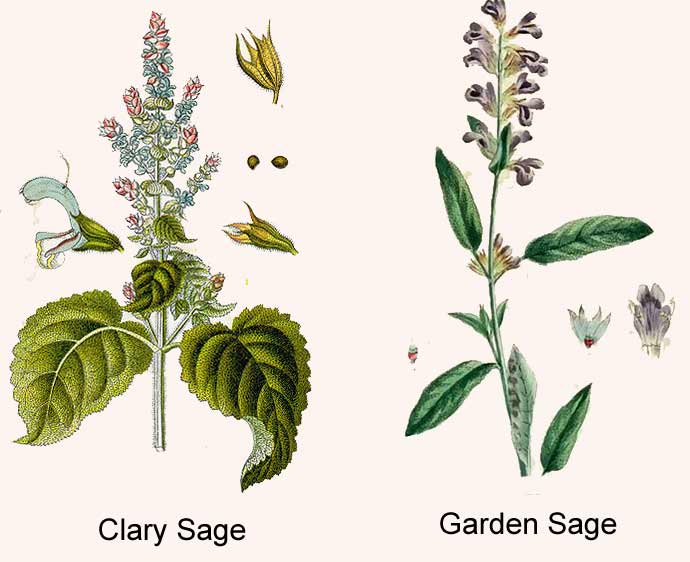
Common garden sage and clary sage are in the same plant family but are very different. Although both are salvias and both are used in herbal medicine, they are used for different purposes.
There are many kinds of sage, but today my focus is on common sage and clary sage.
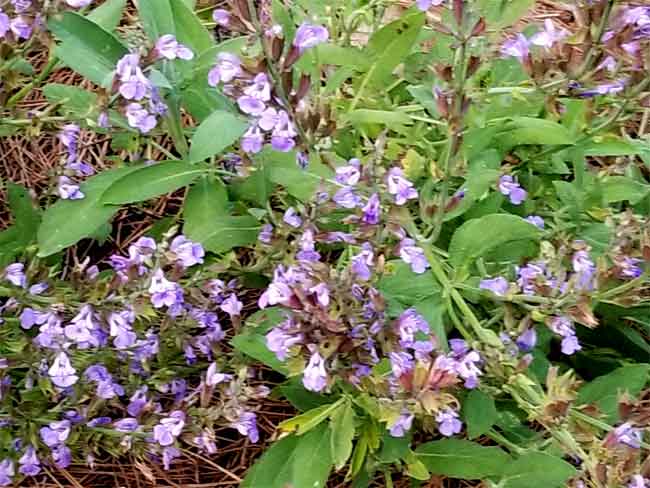
Common sage (salvia officinalis) is used in the treatment of sore throat, mouth ulcers, night sweats, and other menopausal symptoms.
The word salvia comes from Latin and means "to heal". Salvia officinalis is also known as common sage, garden sage, and culinary sage. Its leaves are used in cooking to flavor sausage, turkey stuffing, and cornbread dressing, especially at Thanksgiving.
Common sage leaves, which are drying and cooling, are used medicinally during menopause to relieve night sweats and other uncomfortable symptoms. It is usually used in tea form.
Common sage may also be given to nursing mothers to help wean babies since it helps decrease milk flow. (To increase milk, use fennel.)
Common sage has many uses. Read on to find out more.
Clary sage (Salvia sclarea) heightens awareness and helps focus the mind. It is usually used in essential oil form.
Clary sage essential oil is distilled from the leaves and flowering tops of the salvia sclarea plant and should not be confused with common garden or Spanish sage oils.
It is often used to heal eye problems, digestive problems, nervous disorders, menstrual irregularity, and kidney disease.
Clary sage should not be used when consuming alcohol because it heightens the state of drunkenness.
All about common sage
Common sage is used in the treatment of sore throat, tonsillitis, mouth ulcers, gum disease, laryngitis, coughs, measles, headache, bruises, and menopausal problems.
It is astringent and antiseptic. Sage also relaxes the peripheral blood vessels, reduces perspiration, and reduces salivation. It is a uterine stimulant, promotes bile flow, and stimulates the circulatory system.
Common sage root is sometimes combined with the leaves for extra strength.
Honey and sage work good together.
Common sage is often extracted in to honey. It makes a wonderful healing remedy for sore throat due to colds and flu.
It's easy to make sage honey. Chop sage, add to honey, put on tight lid, let sit in the warm sun for a day or two, then store in refrigerator until needed.
Take a spoonful to relieve sore throat pain every hour or two. Add thyme at the same time you add the sage for extra strength.
Directions for making sage tonic
As an home remedy, common sage is used in herbal teas, tonics, and gargles.
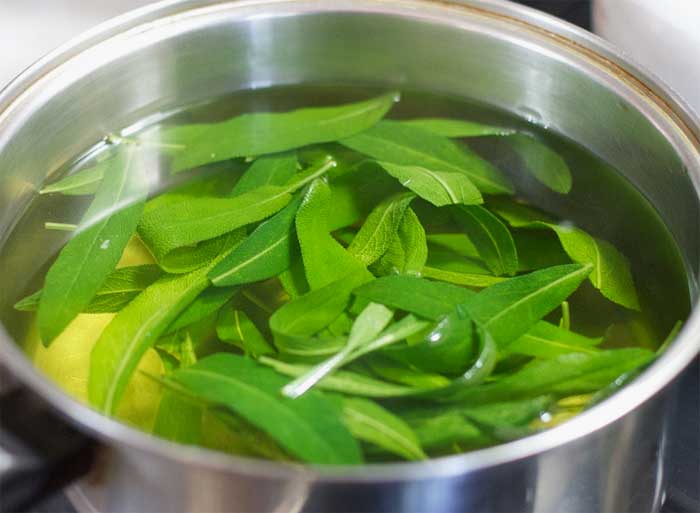
- Combine a handful of sage leaves, two cups of boiling water, two tablespoons of malt vinegar, and one teaspoon of honey.
- Steep the ingredients for thirty minutes and then strain.
- Take a teaspoon three or four times a day for sore throat or use as a gargle.
- This herbal tonic is also good for gum disease and mouth sores.
Use sage as an herbal hair rinse.
Common sage is also used on the scalp and hair where it conditions and restores shine. Sage helps stop dandruff and relieves dry, itchy scalp.
Use as an herbal rinse after shampooing and combine with rosemary for best results.
If you have been reading my Every Green Herb blog for a while, then you know we grow and sell a variety of herbs, but we also buy a lot, too. Try our favorite herbal suppliers for quality and value.
Sage increases memory function.
Common sage is associated with longevity and increased memory. It is often used as an herbal remedy for forgetfulness and confusion in the elderly. Use in tea with honey and lemon.
Use sage in compresses to relieve bruising.
Sage can be used in herbal compresses to relieve bruising. Apply to injured area several times a day. Add a little vinegar for best results.
Sage may also be used on wounds to prevent bacterial infection.
Common sage is also useful as an insect repellant.
Make a strong tea and put in a spray bottle. Apply liberally and often when in mosquito infested areas.
For extra strength, add a few drops of eucalyptus essential oil. Sage essential oil can also be added to mixture.
Use sage to purify and heal.
The Latin name for sage, Salvia, means “to heal".
American Indians use sage in smudge sticks to purify and cleanse their environments.
Smudge sticks are bundles of dried herbs which are burned much like incense. One end of a smudge stick is lit and then blown out, so that it produces a good amount of smoke. For best results, add sprigs of lavender, sweet grass, or cedar.
Smudging your environment with sage
You can use most types of sage for purification. Watch this video to learn about cleansing your environment of negative energies with white sage (Salvia apiana).
Sage is a hardy perennial.
Common sage is a hardy perennial that grows up to three feet tall. The plant has woody stems, grayish colored leaves, and small purple flowers. There are many varieties to choose from including dwarf, golden, pineapple, and variegated.
Sage plants need full sun and grow best in poor, well drained soil. Propagate by seeds, stem cuttings, or layering.
Harvest in the summer and dry for winter use.

Clary sage in aromatherapy
Clary sage essential oil is useful in aromatherapy and as an aid to meditation. It brings about a feeling of well being and satisfaction.
Clary sage is a feel-good essential oil that is well suited for treating PMS and menopausal symptoms. Use clary sage essential oil for scarce periods, nervous fatigue, varicose veins, painful periods, anxiety, stress, inflammation, labor pains, mature skin, and postnatal depression.
Intoxicating properties
Clary sage is known to have intoxicating properties and is sometimes used in the production of wine and vermouth.
It is also a key ingredient in Eau de Cologne. Clary sage essential oil is used in many herbal products especially facial cleansers.
Clary sage essential oil brings relaxation.
Clary sage relaxes the nerves and soothes anxiety.
It is astringent and produces a cooling effect when diluted and used on the skin.
Clary sage essential oil reduces fevers, relieves bloating, stimulates digestion, lowers blood pressure, uplifts the spirit, and is excellent for the female system.
Clary sage is balancing, euphoric, sedative, and an aphrodisiac.
Used before bed time, clary sage may bring about vivid dreams and encourages recollection upon awakening.

More uses for clary sage
Clary sage is often used in the treatment of backaches, muscle stiffness, cramps, sinus problems, sore throat, respiratory infections, and as a uterine tonic.
Use clary sage in eye compresses.
To soothe the eyes, soak a clean cotton cloth in a mixture of warm water and a few drops of clary sage essential oil. Relax and place the compress over both eyes for ten minutes. Do not get oil in your eyes.
Clary sage is good for hair and skin.
Clary sage has regenerative properties and may encourage hair growth.
Clary sage helps limit sebum production and is often added to herbal treatments for dandruff and oily skin.
Clary sage should not be used during pregnancy, but may be helpful once labor is well advanced.
Clary sage should not be confused with common garden sage.
Other types of sage include purple and red sage. Oils made from these varieties of sage are sometimes considered toxic and should be used with extreme care.
Another type of sage is known as Spanish sage.
Spanish sage (salvia lavendulaefolia) essential oil is considered a cure-all. It is used to treat everything from headache to digestive complaints.
Spanish sage essential oil is good for fighting skin infections, stress, gum infections, hair loss, and fluid retention. It is cleansing and detoxifying.
Spanish sage essential oil is extracted from a shrubby evergreen that loves hot weather. Spanish sage essential oil is used externally. Do not take it (or other essential oils) by mouth.
The science of sage
Studies show that sage has pharmacology and therapeutic activities that can help treat depression, dementia, obesity, diabetes, lupus, heart disease, and cancer.
There are more than 900 plants classified as sage. Many are native to the Mediterranean region where they have been used in medicine and cooking for thousands of years.
Sage tea is traditionally used for digestive problems, lung problems, heart problems, sore throat, depression excessive sweating, skin problems, and endocrine diseases.
Sage is carminative, antispasmodic, antiseptic, and astringent.
The essential oil of sage contains high levels of flavonoids and terpenoids that work to fight harmful free radicals. Two substances in sage, carnosic acid and rosmarinic acid, show strong antioxidant properties. Rosmarinic acid is shown to be neuroprotective, antioxidative, and anti-apoptotic.
Ursolic acid, also in sage, has strong anti-inflammatory effects.
Sage works to improve memory and has been used for centuries to slow declining mental functions.
Studies show that Salvia officinalis improves memory, cognition, alertness, and calmness.
Salvia lavandulaefolia is reported to be effective in managing attention disorders.
The aromas of sage essential oils are very potent, affecting mood and memory, although oral consumption is even more effective.
Tests were done in laboratory settings. Do not take large doses of sage without checking with your healthcare professional.
Sage tea has been shown to be just as effective as metformin when treating type 2 diabetes. Sage tea reduces liver glucose production and increases the action of insulin.
Lebanese sage (Salvia libanotica), is shown to have strong antitumor effects and is useful in the treatment of colon cancer.
Chinese sage, or (Salvia miltiorrhiza), is shown to lower cholesterol and triglycerides. It also increases high density lipoproteins (good cholesterol).
Sage is also shown to fight obesity by helping the pancreas to digest fats.
Open clinical trials show that sage helps balance hormones during menopause. This helps reduce everything from night sweats to heart palpitations.
Studies also show that sage protects against diarrhea by reducing spasms in the bowels.
No negative side effects were found during the studies. The normal use of sage is very safe, although excessive amounts may cause problems. Never overuse any herb!
Use sage essential oil to purify the air.
All three sage essential oils are very powerful substances and can cleanse and purify the air in sick rooms.
*Common sage, also known as culinary sage or garden sage, may increase the sedative effect of prescription and over-the-counter drugs when used in therapeutic amounts. Avoid large doses in pregnancy as it may cause miscarriage.
Common sage has been known to trigger epileptic seizures. Do not use common sage in therapeutic amounts if you are hypoglycemic or undergoing anticonvulsant therapy.
Always dilute all sage essential oils before using in the mouth or on the body! Use sage oils in moderation and no more than for two weeks at a time. Do not use sage oil when pregnant, on babies, or in cases of hypertension or epilepsy.
Keep all essential oils away from the eyes. Do not take essential oils internally. Always dilute essential oils with good carrier oil and test on small area of skin before use.
Some sage (salvia divinorum), also known as diviner's sage or purple sage, is hallucinogenic and should only be used with extreme caution in controlled environments such as religious ceremonies.
Always consult with a healthcare professional before using any herbal remedy especially if pregnant, nursing, or taking other medicines.
Sources:
https://www.ncbi.nlm.nih.gov/pmc/articles/PMC4003706/
https://www.ncbi.nlm.nih.gov/pmc/articles/PMC5318325/
Blessings to you and yours!
Thanks so much for reading my blog. Jan.

*Note - the information on this website has not been evaluated by the Food and Drug Administration.
© 2005-2024 website design and content by Janice Boling