Yellowroot in herbal medicine
Yellowroot is used to make a healing tea. Our yellowroot is freshly dried, fragrant, and a powerful medicine. Read on for more information.
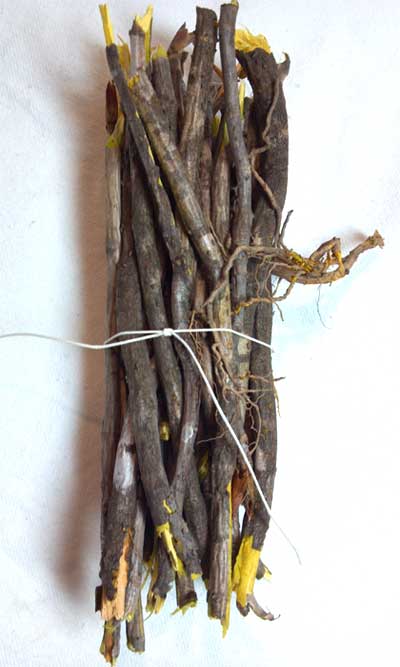
Yellowroot $18.99 with FREE shipping
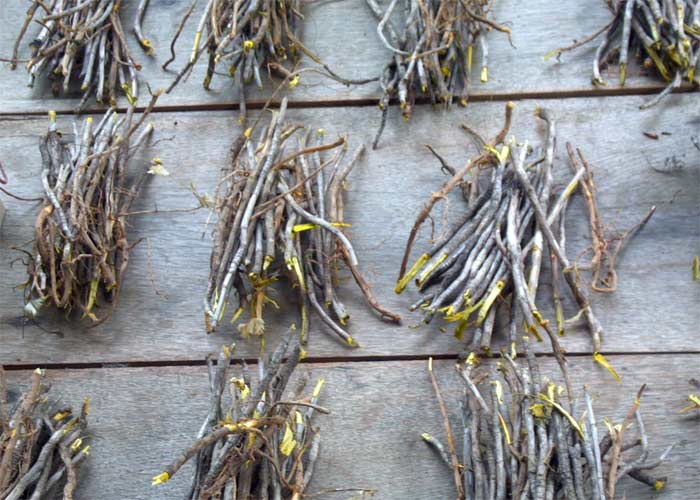
Yellowroot (Xanthorhiza simplicissima) bundle
Each bundle contains approximately 4 ounces of yellowroot stems depending on drying time. We like to dry our yellowroot for at least two weeks to avoid the possibility of mold during shipment. This bundle contains enough yellowroot for at least 2 dozen cups of medium strength yellowroot tea.
Our yellowroot is wild-harvested here in the Blue Ridge Mountains. All of our herbs are hand-selected and held to the highest standards. They have never been sprayed or chemically treated in any way. We hand-break each piece and make sure that only the best is shipped out to our customers.
Purchase bundles of yellowroot today and we will mail it to you within 24 hours. We ship by US Postal Service first class mail, and they usually deliver within 3 or 4 days. Just click the "Add to Cart" button above to order.
Look what's new!
We also sell yellowroot chips which require no breaking. They are great for people with arthritis in their hands.
Read about hunting wild yellowroot in the Appalachian Mountains.
Read about growing your own yellowroot here.
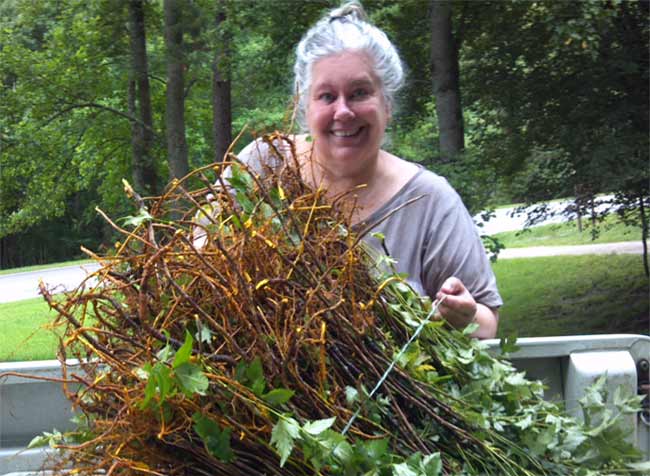
How to make yellowroot tea
Ingredients:
Yellowroot
Water
Honey and lemon (optional)
Utensils:
Enameled, stainless steel, or glass pot with lid
Strainer or colander (optional)
Directions:
Yellowroot tea is easy to make!
-
Break one large (or two small) yellowroot "sticks" into small pieces. Do not remove bark.
-
Put in a pot with a cup of water. Add a tight fitting lid.
-
Bring to a boil and then simmer for five minutes on gentle heat. Remove from heat.
-
Let the tea steep at least 15 minutes before straining out the plant material.
-
When your yellowroot tea is cool enough to sip, take a tablespoon every 30 minutes until it is gone.
-
Take yellowroot tea at the first sign of infection for best results. Yellowroot is a powerful medicine. One cup might be all you need! It is best to make tea fresh everyday. In a pinch, you can reuse the sticks.
Yellowroot is a time-tested natural remedy for people in the Appalachian Mountains and beyond. It is used to treat many common health problems including mouth sores, gum disease, sore throat, the tonsils, the esophagus, the stomach, and the urinary tract.
A natural antibiotic, yellowroot stops bacteria from sticking to the bladder walls.
This makes the herb an effective remedy for urinary system infections.
Here is a short video that I made about yellowroot and bladder infections.
More about yellowroot
The Cherokees used yellowroot to treat indigestion, poor appetite, whooping cough, liver disorders, fevers, heart problems, snakebite, and cancer.
Yellowroot was also used as a yellow dye and added to face paint.
American Indians also used yellowroot to treat jaundice, caused by a buildup of waste material or infection in the blood.
Yellowroot is anti-inflammatory and a natural antibiotic.
Yellowroot can improve digestion, flush out harmful toxins, heal ulcers, and reduce harmful bacteria in the urinary tract.
This useful medicinal plant can help in the treatment of sinus infections, colds, flu, sore throat, laryngitis, mouth sores, colitis, gastritis, ulcers, chest congestion, diarrhea, and earache.
Yellowroot is a uterine tonic and a digestive aid. It is an excellent liver stimulant and is useful in soothing mucus membranes.
Yellowroot can be added to teas, eyewashes, salves, and more.
Yellowroot is used in herbal teas, capsules, powders, eyewashes, gargles, ear drops, douches, and salves. It is also a cooling astringent that reduces phlegm.
When combined with ginseng, yellowroot helps to naturally boost the entire immune system.
Tips for Yellowroot tea
Here on Payne Mountain Farms, we make yellowroot tea at the first sign of toothache or bladder infection. We use approximately one tablespoons of plant material per cup of water. Measurements do not have to be exact.
Do not peel yellowroot before making tea, but breaking the "stems" into small pieces is recommended. They should be about an inch long.
Simmer or gently boil the yellowroot pieces in a cup of water for five minutes, or steep for up to an hour depending on how strong you want your tea to be.
We take a tablespoon of yellowroot tea every hour throughout the day and then drink down what is left an hour before bed time. You can add honey and lemon if desired to improve the taste (yellowroot is bitter). I have been known to chase mine with orange juice. I hate the taste of yellowroot, but Tony says it's not too bad. Yellowroot tea is not like chamomile, you do not drink it because of its flavor.
Yellowroot tea is best made fresh everyday. Also, if you are running low on yellowroot, you can reuse the pieces. Your tea will still be potent and effective.
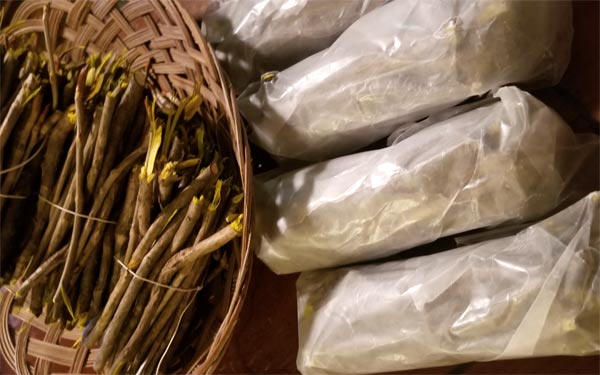
Use yellowroot tea as a wash to heal the gums and the skin.
As an herbal mouthwash, yellowroot helps heal mouth ulcers, gum disease, and sore throats.
When used as an external herbal wash, yellowroot can soothe irritated skin problems like itchy rash, eczema, and measles.
Powdered yellowroot can be sprinkled on infected cuts and abrasions to help heal and protect the skin. Yellowroot salve makes an excellent herbal remedy for chapped lips and dry skin.
A small piece of yellowroot can also be chewed like a toothpick. Tony says chewing yellowroot cures his toothaches. At least it buys some time while waiting on a dentist appointment.
Combine yellowroot with chasteberry for women's problems.
Yellowroot is used to treat various female conditions including PMS and yeast infections.
It can be useful in preventing night sweats and hot flashes during menopause, especially when combined with chasteberry.
Demand for yellowroot is increasing.
Yellowroot is one of the most popular of all medicinal herbs. It is estimated that 250,000 pounds of yellowroot is sold each year.
Demand for yellowroot has increased dramatically since 1990 due to the false belief that yellowroot tea can mask the presence of illegal drugs in a urine test. This assumption is incorrect, so don't depend on it.
Demand for yellowroot has also increased because of the rising price of goldenseal (Hydrastis Canadensis). As wild goldenseal becomes harder and harder to source, many herbalists are substituting yellowroot for the fleshier goldenseal. I sure hope goldenseal recovers in the wild. I hate to see any of God's creations go extinct.
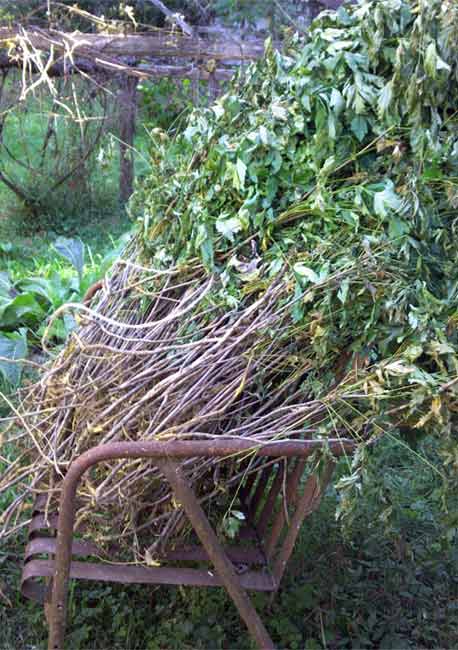
Yellowroot is a sustainable plant.
There are no fears about over-harvesting yellowroot! Even if you pull up a whole patch, it will grow back from pieces of rhizomes that break off in the ground.
Here in the Southern Appalachian Mountains, yellowroot is plentiful. There are places where it grows for as far as the eyes can see in every direction. Isn't that wonderful news?
Berberine gives yellowroot its distinctive color.
Yellowroot gets its color from berberine, the major alkaloid in the plant. The berberine content in yellow root is estimated to range from 1.2% to 1.3%.
Berberine is a naturally occurring active constituent in the root, rhizome, stem and bark of yellowroot, with no genotoxic, cytotoxic, or mutagenic effects reported with clinical doses.
Berberine is also present in other medicinal herbs including turmeric, goldenseal, barberry, Oregon grape, and golden thread.
A powdered form of berberine is taken by mouth for treating high cholesterol, high blood pressure, high triglycerides, and diabetes.
Berberine can lower blood sugar, lower blood pressure, and reduce testosterone levels. Use with caution if you have diabetes or heart problems.
In powdered form, berberine is a natural remedy for cold sores.
Early research suggests that berberine can reduce symptoms and lower death rates in some patients suffering from congestive heart failure. Current research shows that berberine may be better than prescription medications for several conditions and diseases.
According to Naturopathic Doctor News and Review, "Being bitter, plants high in the yellow berberine alkaloids have alterative action, that of cleansing the blood. The lymphatic system function is activated. Bile flow is stimulated, freeing the energy of the liver, moving stagnation. When the liver is flowing, there is better digestion and improved elimination through the colon."
I couldn't have said it better.
Where does yellowroot grow?
Yellowroot flourishes in temperate forests and shady meadows. The fern-like plants like to grow near running water, especially on a creek bank or near a river.
Yellowroot is a great ground-cover for keeping the soil in place during times of heavy rainfall. The underground rhizomes are nature's solution to erosion.
Yellowroot plants grow from 12 to 36 inches tall. After emerging in early spring, flower buds quickly develop into small white or lavender flowers. The flowers are not very noticeable and you have to look careful to find them.
Yellowroot plants require moist, rich soil.
Yellowroot will not grow in poor, dry soil. The plant likes rich, loamy dirt and is usually found growing in large patches along with May apple, trillium, bloodroot, and black cohosh.
When gathering yellowroot, try not to damage the creek banks and forest floors. Cut yellowroot off at ground level for easy harvest. The rhizomes will grow new stems and leaves within a few weeks.
Store dried yellowroot for winter use.
We harvest our yellowroot all year long. Even though it loses it's leaves in the winter, we can still find it since we know where it is growing.
We usually dry our yellowroot for 2 or 3 weeks and then start shipping it out. We don't like to store it longer than two or three months. Old yellowroot does not have the aroma and taste that our customers have come to expect.
How to identify a yellowroot plant
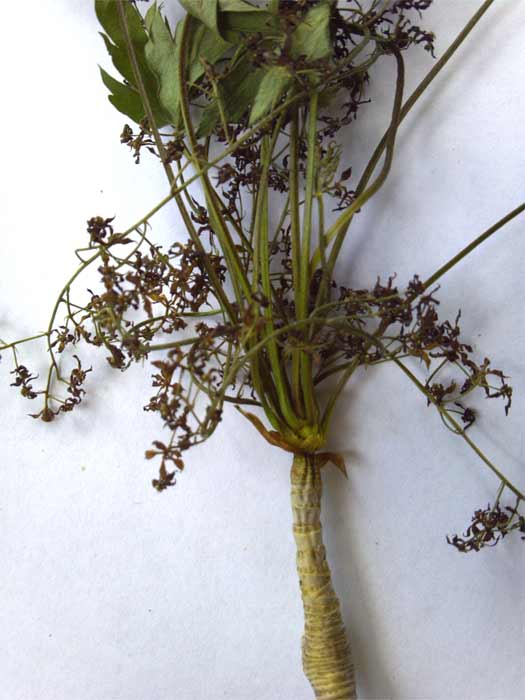
Yellowroot is easy to identify. As the name implies, the rhizomes and stems are bright yellow when scraped with a fingernail or digging tool. In summer, the plants have whorls of emerald green leaves which are serrated and shaped like a feather.
Yellowroot flowers are small and not very noticeable. They first appear under the leaf buds in late winter or early spring. The ones in the photo above have dried up and are fixing to fall.
What is the difference between Yellowroot and Goldenseal?
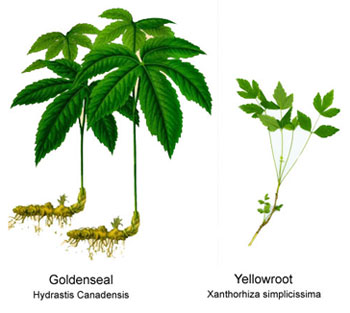
There are many plants around the world known as yellowroot. If Latin names or pictures are not used, which plant an author or herbalist is referring to is just a guess.
Besides Xanthorhiza simplicissima and Hydrastis canadensis, turmeric is also known as yellow root (but is is more orange).
Xanthorhiza Simplicissima is related to the clematis vine.
North Georgia “yeller” root is more kin to clematis than goldenseal. North Georgia yellowroot has delicate tops, skinny stems, and rhizomes with fine roots.
It grows wild on shady creek banks. Both the stems and underground roots are used for healing. Yellowroot leaves are added to the compost pile.
Hydrastis Canadensis, the other yellowroot, has fleshy, fat rhizomes.
Goldenseal is usually found up north in dryer locations. It is a larger plant with much broader leaves and thicker, knobby roots that resemble a tuber. I don't think I have ever seen any wild goldenseal growing in North Georgia but yellowroot is common.
Both contain an active ingredient called berberine.
Yellowroot and goldenseal do not look anything alike, but both plants contain a strong, astringent alkaloid known as berberine (and other similar, active ingredients). Research shows that berberine has anti- bacterial, anti-fungal, and anti-parasitic activity.
Both plants have been used as medicines for hundreds of years. Although both once grew abundantly all over the eastern United States, much of the wild goldenseal (Hydrastis Canadensis) crop was over-harvested and is now close to becoming endangered.
Xanthorhiza Simplicissima is still plentiful.
Yellowroot tea works quickly!
One of the most effective ways to get either plant into the body is with tea. A weak tea can be made with a tablespoon of plant material simmered in two cups of water for ten minutes. Make stronger tea with less water or by adding more plant material.
Yellowroot and goldenseal are used to treat inflammations and infections, improve digestion (as a bitter tonic), to sooth mucus membranes, and to treat ulcers. Yellowroot and goldenseal can lower blood pressure, reduce fat levels in the blood, induce the secretion of bile, and help stop bleeding.
Yellowroot is a digestive stimulant and more.
Yellowroot and goldenseal stimulate involuntary muscles in the intestinal tract and uterus. Yellowroot and goldenseal teas are used to stop diarrhea, to relieve constipation, to help liver problems, flatulence, pneumonia, cancer, and rattlesnake bites.
Other uses include treating hemorrhoids, kidney stones, water retention, acne, bruises, acne, eczema, and psoriasis.
Yellowroot and goldenseal are also used to ease the symptoms of colds, flu, feverish conditions, and hay fever, especially to clear the sinuses and lungs of sticky phlegm, but should not be used when chills are present.
Yellowroot and goldenseal make a strong tonic that boosts the immune system. Combined with echinacea, astragalus, licorice, or ginseng for added strength.
Roots, stems, and bark are used to make tea. The leaves are usually discarded. Yellowroot grows beside cool, running water in shady wilderness areas and is not easily cultivated in the home garden.
*Do not use yellowroot internally for extended periods (greater than 2 weeks at a time). Do not give yellowroot to children or babies. Over use of yellowroot can slow heart beat and extremely high doses can be paralyzing to the central nervous system.
Do not use during pregnancy since berberine stimulates the uterus and may induce abortion. Large doses or taking yellowroot for too long of a period can cause vertigo, motion sickness, nausea, vomiting, depression, nervousness, respiratory problems, hallucinations, and seizures.
Consult with your health care provider before using yellowroot or goldenseal especially if pregnant, nursing, or taking other medications. If rashes, hives, shortness of breath, or other symptoms develop while using yellowroot or goldenseal, contact your health care provider as soon as possible.
Do not use if you have high blood pressure without consulting your healthcare provider. The safety of yellowroot in nursing women, children, and people with kidney and liver disease is unknown.
Side effects are rare if yellowroot is taken in correct doses but fresh root can cause mouth irritation. Discontinue use if dizziness or any uncomfortable symptoms occur. Always consult with a physician or health care professional before using any herbal remedy.
Sources:
https://www.drugs.com/npp/yellow-root.html
https://www.webmd.com/vitamins/ai/ingredientmono-1126/berberine
https://ndnr.com/naturopathic-news/yellow-medicine-the-berberine-alkaloid-plants/
Blessings to you and yours!
Payne Mountain Farms
Located in Blairsville, Georgia, Tony and I sell wild herbs and handcrafted products - all dried, produced and packaged on our family farm in the North Georgia Mountains. Inventory changes with the seasons depending on what is available and may also vary from year to year. Celebrating our Appalachian heritage where sustainable farming is a way of life, we appreciate our customers and promise to provide the best service, the highest quality merchandise, a secure shopping experience, and fair prices.
Thanks so much for reading my blog. Jan.

*Note - the information on this website has not been evaluated by the Food and Drug Administration.
© 2005-2024 website design and content by Janice Boling